
For twins Georgia and Ellen life today is full of stability, routine and fun-filled days.
The 34-year-old sisters, who have an intellectual disability, share specialist disability accommodation on Sydney’s Northern Beaches.
For 10 years they’ve lived in a home where they feel safe, supported and part of an inclusive community – a stark contrast to the uncertainty they faced before the NDIS. Parents Mary-Ellen and Ross describe the move as “life changing”.
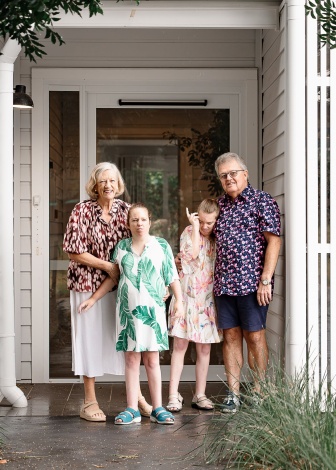
Mary-Ellen said before the NDIS, life was a constant battle.
‘The girls left home at 20, but under the previous disability system, a lot of providers could only offer temporary or emergency housing. Some rented homes short-term, forcing Georgia and Ellen to move multiple times. Moving was traumatic for them,’ she said.
‘On the twins’ third move, their provider said they didn’t want to help us anymore. They said it was too costly, and we needed to find another provider. We were shocked. It was awful and unsettling for the girls. This is what disability looked like before the NDIS.’
Mary-Ellen turned to a local provider for assistance. At the time the NDIS was also launching in their region.
The provider worked with the twins to renovate a cottage specifically to meet their home and living support needs. Georgia and Ellen became part of a campaign, to show what true person-centred support could look like.
When the cottage later evolved into purpose-built specialist disability accommodation, Ross played a hands-on role helping to source sites. The final design was a large U-shaped layout housing 4 separate units, an office and a shared garage.
This new home gave the twins independence, keeping them close to each other and to their peers.
‘It’s lovely the girls have been able to stay together,’ Mary-Ellen said. ‘They interact with others, and every unit has its own space and courtyard.’
The twins also enjoy a mix of activities out in their community. They have access to a coordinated allied health team who support them with a range of therapies, including speech, physio and behavioural.
Their therapists work together to build and foster their confidence and capacity.
When Ellen became unwell and lost her mobility, her NDIS-funded physiotherapy helped her regain her strength.
Mary-Ellen said now Ellen’s nearly back to what she could do before.
‘I’m always amazed at how we’ve been able to build this wonderful team around the girls,’ she said.
‘We meet every 3 months. Everyone bounces off each other – where we’re up to, what can we do next and where we should be going. It’s just fantastic.’
Mary-Ellen and Ross, who live nearby, enjoy bringing the twins home every Saturday.
‘We love spending time with the girls. We do lots of different activities together, but when we say, “Okay, we better start packing up now. It’s time to go home” there’s no tears. Instead, they’re both up and at the door, happy and ready to go,’ Mary-Ellen laughed.
‘They love going back to their own home. It’s fantastic. I would be worried if they were crying, not wanting to go back. They just love living in their own home and having their independence.’
Growing up, the family faced constant pressure. Mary-Ellen and Ross were raising 4 children under 4. When the twins were 12 months old the couple noticed they weren’t meeting their milestones. Unsure of what to do or where to go, they found it difficult navigating supports.
‘Back then the disability system was fragmented, stigma was everywhere, and support was limited,’ Mary-Ellen said. ‘Family life was continually physically and emotionally demanding.’
Now the twins’ support coordinator manages their complex supports. Most importantly, they have independence, choice and a meaningful life in their community.
‘The girls’ NDIS support has given us all the ability to breathe,’ Mary-Ellen said. ‘I was able to go back to work; we can parent the girls instead of being their full-time carers and it also means our older children, Kate and Sam, can be their siblings, not their future carers. It’s a wonderful outcome.’
After decades of advocacy, love and perseverance, Mary-Ellen’s message to other families is clear: ‘Don’t be afraid to accept help. It saves families. It gives your children independence and lets them live the life they deserve.’
For Georgia and Ellen, their life is unfolding every day. It’s full of new opportunities and experiences, routine, home comforts and community inclusion.
For their family, the NDIS has not only strengthened the twins’ independence, but also each one of them.’